Planning your visit to Wat Phra Kaew can feel overwhelming with so many iconic halls, murals, and royal buildings to explore. These suggested itineraries help you make the most of your time, whether you have just one hour or a full day to discover the temple, the Grand Palace, and nearby riverside attractions. Choose the route that fits your schedule and enjoy a smooth, well-organized visit.
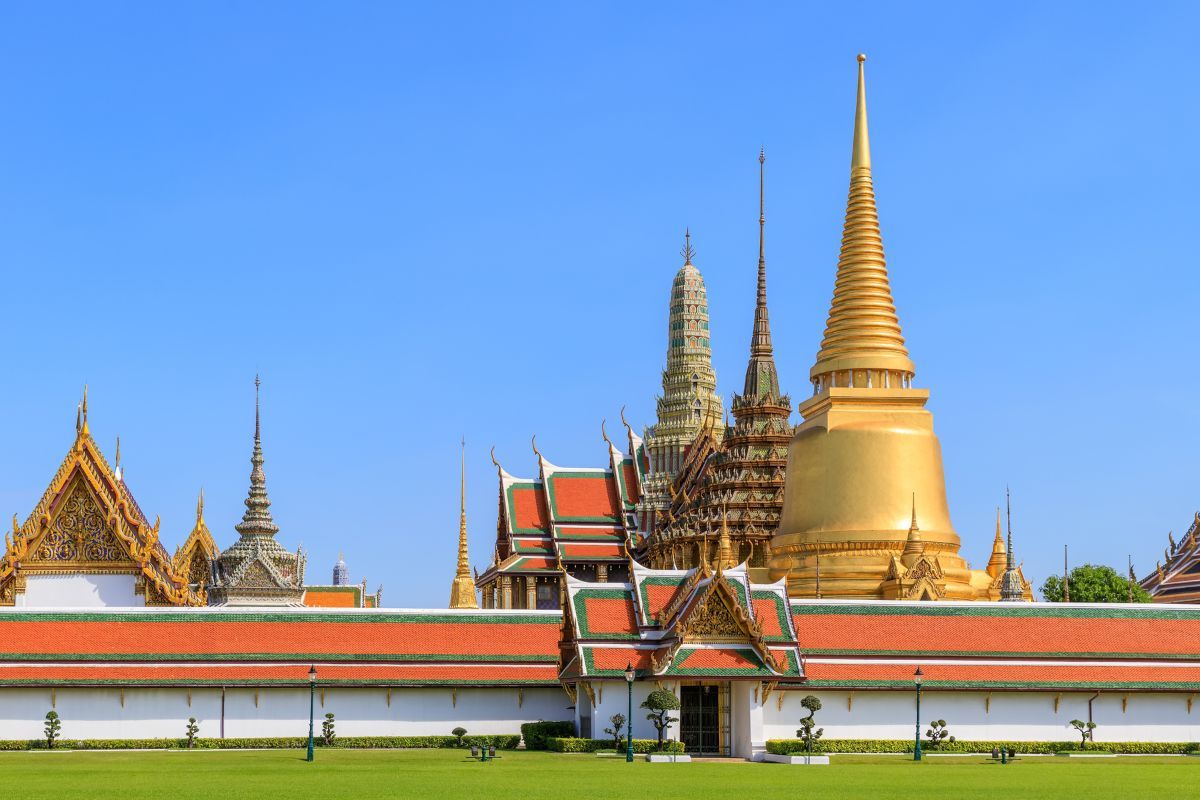
Top Things to Do in Wat Phra Kaew
1. See the Emerald Buddha
The highlight of Wat Phra Kaew is undoubtedly the Emerald Buddha, Thailand's most sacred religious icon. Carved from a single block of deep green jade rather than actual emerald, this 66-centimeter statue embodies spiritual protection, prosperity, and the unity of the Thai nation. According to historical records, the Emerald Buddha has traveled through several Southeast Asian kingdoms—including Chiang Rai, Lampang, Chiang Mai, Laos, and finally Bangkok—before being enshrined here in 1784 by King Rama I.
The statue is housed inside the Ubosot, seated high on an intricately carved golden pedestal. One of the temple's most important traditions is the seasonal robe-changing ceremony, performed personally by the King of Thailand three times a year. Each robe—summer, rainy season, and winter—symbolizes blessings and protection for the country.
Photography is strictly forbidden inside the Ubosot to maintain its sanctity, so visitors must observe respectfully. Even so, simply standing in the hall and witnessing the serene presence of the Emerald Buddha is an unforgettable experience.
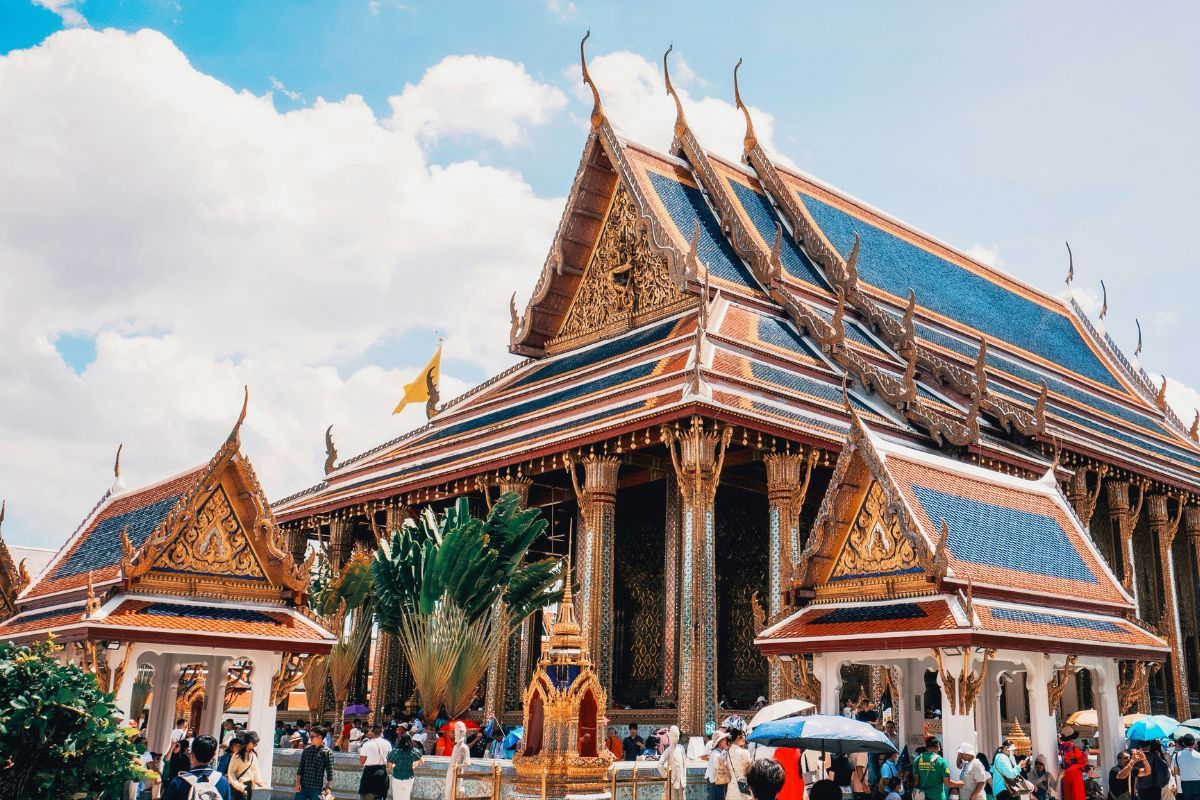
Explore the Ubosot (Ordination Hall)
The Ubosot is the most sacred building in Wat Phra Kaew and one of the finest examples of Thai religious architecture. Its exterior gleams with gold, mirror mosaics, and multicolored tiles, while the roof displays layered, intricately styled gables that reflect traditional Rattanakosin artistry.
Inside, the atmosphere is quiet and reverent. The walls are covered with murals depicting Buddhist cosmology, mythical beings, and celestial realms. Every detail—from the delicate patterns on the columns to the ornamental golden trim—reinforces the spiritual importance of the space. Visitors are expected to sit or kneel respectfully, avoid pointing feet toward the Buddha image, and maintain silence.
Walk the Ramakien Mural Gallery
Surrounding the inner cloister of Wat Phra Kaew is the Ramakien Mural Gallery, the longest continuous mural in the world. These exquisitely painted scenes tell the story of the Ramakien, Thailand's national epic derived from the Hindu Ramayana. The tale follows Prince Rama, his loyal brother Lakshmana, and the monkey general Hanuman in their heroic quest to rescue Princess Sita.
The murals are vibrantly colored, rich in detail, and full of movement—depicting battles, celestial beings, and moral allegories woven into Thai culture. Some of the best sections include:
- Hanuman's adventures (extremely popular for photography)
- Epic battle scenes featuring demons and celestial warriors
- Depictions of heavenly realms with golden backgrounds
Walking the entire gallery gives you a deeper appreciation for the artistry and storytelling traditions that have shaped Thai heritage.
Visit the Phra Mondop (Scripture Library)
The Phra Mondop serves as the temple's sacred library, housing ancient Buddhist scriptures inscribed on palm-leaf manuscripts. Although the building is closed to the public, its exterior is a masterpiece of craftsmanship.
The hall is adorned with intricate glass mosaics, gold latticework, and mythical guardians. Nagas (serpents) line the staircases, while Garuda figures clasping nagas appear on the pediments. Even from the outside, the Phra Mondop radiates a sense of holiness and reverence.
Admire Phra Si Ratana Chedi (Golden Stupa)
Perhaps the most eye-catching structure in Wat Phra Kaew is the Phra Si Ratana Chedi, a towering golden stupa inspired by ancient Sri Lankan architecture. Covered in radiant gold tiles, it catches the sunlight beautifully, making it one of the most photographed icons of the temple.
Inside, the stupa enshrines sacred Buddhist relics. The best photo angles can be found:
- At the base of the chedi with the sunlight behind you
- From the opposite side of the courtyard, capturing its full height
- With the Yaksha guardians in the foreground
This is a must-stop for photographers and history enthusiasts alike.
Discover the Model of Angkor Wat
One of the more unique features in the complex is the scaled model of Angkor Wat, commissioned by King Rama IV. At the time, Siam held influence over parts of Cambodia, and the replica was created to symbolize the grandeur of Khmer architecture.
The model provides visitors with a fascinating miniature view of the world-famous temple and highlights the cultural connections between ancient Thai and Khmer civilizations.
Take Photos with the Demon Guardians (Yakshas)
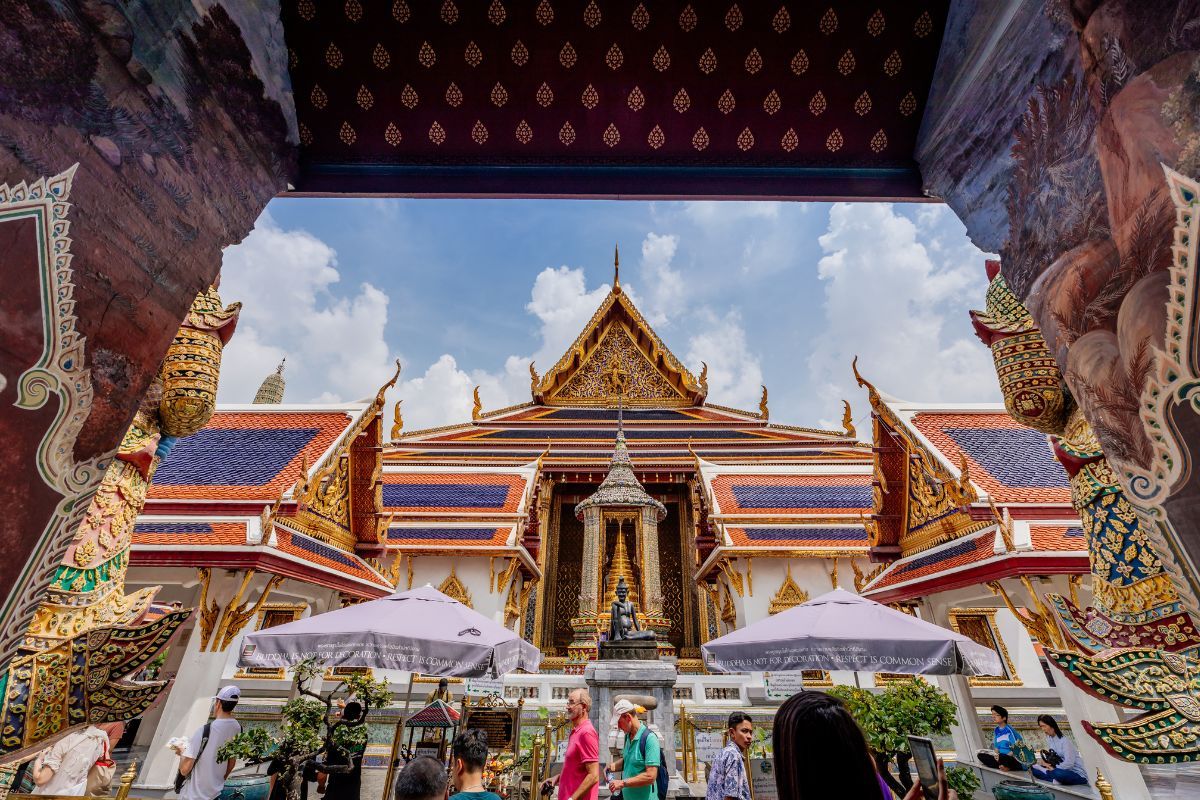
Towering at the entrances of the main halls are brightly colored Yakshas—mythical demon guardians tasked with protecting the temple from evil spirits. These imposing statues, adorned with elaborate patterns and fierce expressions, are favorites among visitors.
The best photography spots include:
- At the entrance to the Ubosot, capturing the Yaksha side-by-side
- With the golden stupa behind the Yakshas
- During the golden hour, when their colors are at their most vibrant
The Yakshas are both symbolic and decorative, representing the strength and guardianship of sacred spaces.
Explore Additional Prangs, Shrines & Pavilions
Beyond the famous structures, Wat Phra Kaew contains numerous smaller shrines, pavilions, prangs, and ceremonial halls that many visitors overlook. Hidden gems include:
- Miniature prangs decorated with floral tiles
- Small shrines dedicated to guardian deities
- Rest pavilions featuring traditional golden trim
- Sculptures of mythical creatures like garudas and kinnari
Taking your time to wander between these smaller buildings reveals layers of artistry and devotion that help define the temple's character.
Explore the Grand Palace Complex
After exploring Wat Phra Kaew, continue into the Grand Palace complex, which features multiple historic halls once used for royal ceremonies, state events, and official receptions.
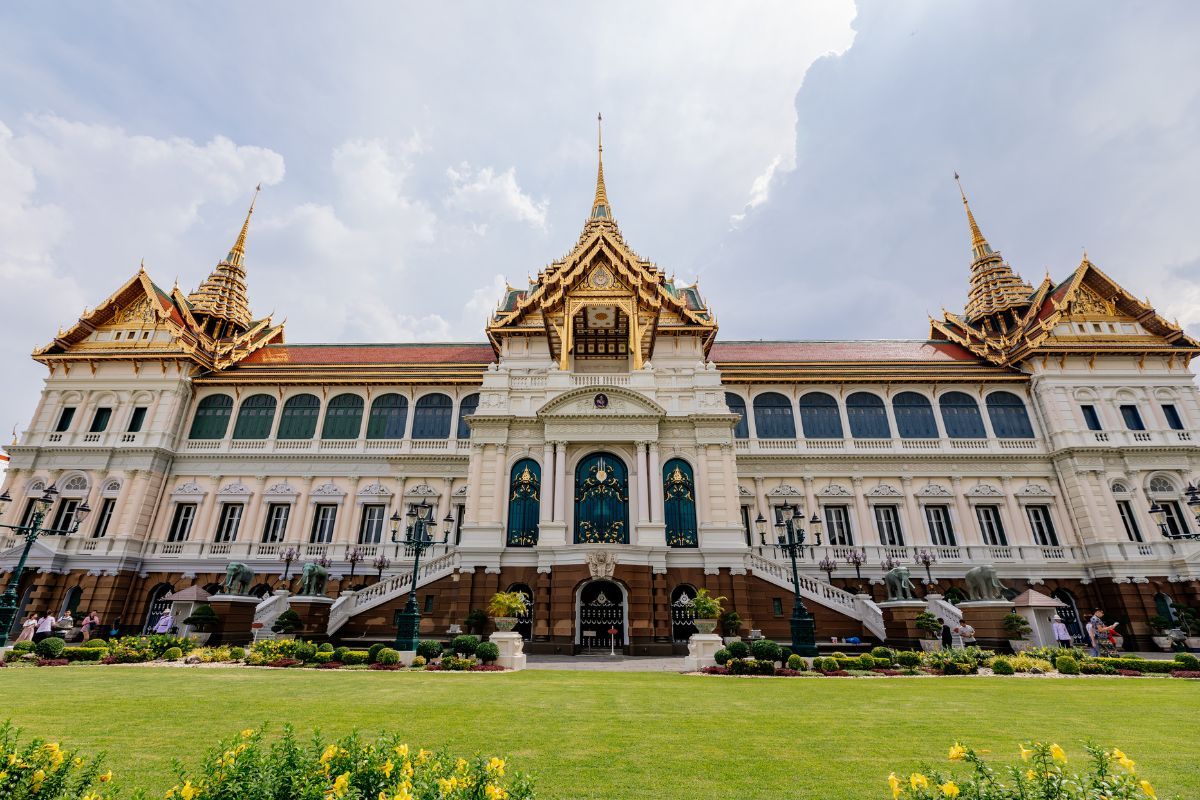
1. Chakri Maha Prasat Throne Hall
This grand building showcases a fascinating fusion of Thai regal rooftops and Western-style Victorian architecture, symbolizing Thailand's 19th-century modernization. It was previously used for royal banquets and state events.
2. Boromabiman Hall
Built in a French architectural style, Boromabiman Hall served as a residence for visiting dignitaries. Its balconies, columns, and decorative moldings give it a distinctly European elegance rarely seen in Thai palaces.
3. Amarindra Hall
Amarindra Hall holds immense historical importance, as it was used for coronation ceremonies and houses an ancient royal throne. Although entry is restricted, viewing its exterior is a memorable experience.
4. Dusit Maha Prasat Hall
This hall exemplifies traditional Thai architecture, complete with gilded patterns, layered roofs, and elaborate carvings. It was traditionally used for lying-in-state ceremonies and royal funerals.
5. Queen Sirikit Museum of Textiles
Located near the entrance of the Grand Palace, this museum offers a look into the legacy of Thai textiles through:
- Royal garments worn by Queen Sirikit
- Traditional weaving techniques
- Exhibits on Thai silk craftsmanship
It's an excellent stop for culture and fashion lovers.
6. Pavilion of Regalia, Royal Decorations & Coins
This museum houses Thailand's national treasures, including:
- Royal regalia and coronation artifacts
- Insignia and medals
- Historic coins and currency
- Ornate royal accessories
The collection offers a deep look into Thailand's monarchy and cultural symbolism.
Perfect Itineraries for Exploring Wat Phra Kaew & the Grand Palace
1. Hour Express Visit
Ideal for travelers with a tight schedule but who still want to see the essentials.
- Emerald Buddha (Ubosot interior): Head straight to the ordination hall to view Thailand's most sacred statue, carved from a single piece of jade.
- Ubosot Exterior: Walk around the hall to appreciate its glittering mosaics, guardian figures, and multi-tiered roof details.
- Ramakien Mural Highlights: Stroll along a short section of the gallery walls and view a few key scenes from the Thai epic, including battles and celestial motifs.
- Phra Si Ratana Chedi (Golden Stupa): Snap photos of the iconic gold-tiled stupa shining under the sun.
- Yaksha Guardians: End your quick visit with a photo at the entrance, where the towering demon guardians stand watch over the complex.
This itinerary allows you to experience the most iconic landmarks in a short but satisfying visit.
2. Hour Complete Wat Phra Kaew Walkthrough
Perfect for visitors who want to explore all major highlights within the temple grounds.
- Emerald Buddha: Start inside the Ubosot to admire the sacred statue and the peaceful atmosphere of the hall.
- Full Ramakien Mural Gallery: Walk the entire inner cloister to appreciate the world's longest painted mural. Look for important chapters like Hanuman's missions and the epic war scenes.
- Phra Mondop (Scripture Library): View the ornate exterior decorated with gold and glass mosaics, and learn about the sacred manuscripts stored inside.
- Model of Angkor Wat: Examine the scaled replica and read the plaques explaining its historical origin during the reign of King Rama IV.
- Phra Si Ratana Chedi (Golden Stupa): Circle around the stupa for different angles and observe the intricate tilework up close.
- Key Pavilions & Shrines: Explore lesser-known prangs, rest pavilions, and small shrines featuring mythical animals, golden carvings, and detailed craftsmanship often overlooked by visitors.
This itinerary provides a deeper, more immersive understanding of Wat Phra Kaew's artistry and history.
3. Half-Day: Grand Palace + Wat Pho
A recommended itinerary for first-time visitors who want a cultural deep dive.
- Complete Wat Phra Kaew: Spend your morning exploring the Emerald Buddha, mural galleries, chedis, scripture hall, and pavilions in detail.
- Grand Palace Halls: Continue into the palace complex to see key buildings such as Chakri Maha Prasat, Boromabiman Hall, and Dusit Maha Prasat from the outside.
- Walk to Wat Pho: Just a short walk away, Wat Pho houses the massive Reclining Buddha and intricate murals.
- Traditional Thai Massage School: End your visit with an authentic Thai massage at the temple's traditional medical school—the birthplace of Thai massage.
This half-day route covers two of Bangkok's most important cultural landmarks without feeling rushed.
4. Full-Day: Grand Palace + Wat Arun + River Cruise
A complete day of Bangkok's most iconic temples and riverside highlights.
- Morning at Wat Phra Kaew & Grand Palace: Explore the Emerald Buddha Temple and palace grounds while the weather is cooler and crowds are lighter.
- Cross the River to Wat Arun: Take a short ferry ride across the Chao Phraya River to visit the Temple of Dawn, famous for its towering prang decorated with porcelain tiles.
- Afternoon at Tha Maharaj: Return to the riverside and spend time at Tha Maharaj, a boutique mall with cafés, restaurants, and river views.
- Chao Phraya Sunset Cruise: End your day with a scenic evening cruise, passing illuminated landmarks such as the Grand Palace, Wat Arun, and Rama VIII Bridge.
This full-day itinerary offers a beautifully balanced mix of culture, sightseeing, and relaxation along Bangkok's historic river.
Traveler Tips for Visiting Wat Phra Kaew
1. Arrive early
Get there right at the 8:30 a.m. opening to avoid crowds, tour groups, and midday heat. Early mornings also offer the best lighting for photos.
2. Bring water and sun protection
The Grand Palace grounds have limited shade. Pack a bottle of water, sunscreen, sunglasses, and a hat to stay comfortable while walking outdoors.
3. Wear easy slip-on shoes
You'll need to remove your shoes before entering the Ubosot and some other halls. Slip-on shoes or sandals make the process faster and more convenient.
4. Carry cash for tickets and small purchases
Although card payments may be available, cash is often easier and faster for entrance tickets, drinks, and small vendors around the area.
5. Check the official website for closures
The temple occasionally closes for royal ceremonies. Always confirm opening hours and announcements on royalgrandpalace.th before your visit.
6. Beware of "palace closed today" scams
Ignore anyone outside claiming the Grand Palace is closed or offering alternative tours. These are common scams. Walk straight to the official entrance instead.
FAQs of Things to Do in Wat Phra Kaew
Q: What are the must-see attractions inside Wat Phra Kaew?
A: The top highlights include the Emerald Buddha, the Ubosot (Ordination Hall), the Ramakien mural gallery, Phra Mondop (Scripture Library), Phra Si Ratana Chedi (Golden Stupa), the Demon Guardian statues, and the model of Angkor Wat.
Q: How long does it take to explore Wat Phra Kaew?
A: A quick visit takes about 1 hour, but a complete walkthrough with murals, pavilions, and photo stops takes 2--3 hours.
Q: Can I take photos inside the temple?
A: Photography is strictly prohibited inside the Ubosot, where the Emerald Buddha is housed. Photos are allowed in the outdoor areas of the complex.
Q: What is the Emerald Buddha and why is it important?
A: The Emerald Buddha is a sacred jade statue believed to bring prosperity and protection. Its seasonal robes are changed three times a year by the King of Thailand.
Q: Are there guided tours available?
A: Yes. You can join onsite guides, book private tours, or use audio guides that explain the architecture, murals, and history of the Grand Palace and Wat Phra Kaew.
Q: What should I wear when visiting Wat Phra Kaew?
A: A strict dress code applies: shoulders and knees must be covered, and torn clothing is not allowed. If needed, rental clothing is available at the entrance.
Q: What are the best areas for photography?
A: Popular photo spots include the golden stupa, Demon Guardian statues (Yakshas), Phra Mondop façade, and the outer courtyard with palace architecture.