Wat Pho, officially known as Wat Phra Chetuphon Wimon Mangkhalaram Rajwaramahawihan, is one of Bangkok's most revered and historically significant temples. It is best known as the home of the Reclining Buddha, a majestic 46-meter-long golden statue and the birthplace of traditional Thai massage. Beyond its spiritual importance, Wat Pho represents a cornerstone of Thai culture, art, and education.
If you're wondering what to see in Wat Pho or what to do in Wat Pho, this guide covers everything — from temple highlights and history to practical visitor information and tips for an unforgettable experience. Whether you're crafting a travel guide to Wat Pho or building your Bangkok itinerary, this sacred site is a must-visit destination that blends serenity, artistry, and cultural depth.
History & Significance of Wat Pho
Wat Pho, one of Bangkok's oldest temples, dates back to the 16th century and was rebuilt by King Rama I as part of his vision for the new capital. Later expanded under King Rama III, it became a center for Buddhist learning with hundreds of Buddha images collected from across Thailand.
Often called Thailand's first public university, Wat Pho was a hub for religion, literature, medicine, and traditional Thai massage. Today, it houses the renowned Wat Pho Thai Traditional Medical and Massage School and remains a UNESCO-recognized cultural landmark, celebrated for its stunning stupas, murals, and intricate Rattanakosin-era architecture.
How to Get to Wat Pho
Wat Pho, or the Temple of the Reclining Buddha, is located in Bangkok's historic Rattanakosin district, just south of the Grand Palace and along the Chao Phraya River. The temple is easily accessible by several routes:
- By BTS Skytrain: Take the Silom Line to Saphan Taksin Station (S6). From there, walk to the Sathorn Pier (Central Pier) and board a Chao Phraya Express Boat heading upriver. Get off at Tha Tien Pier (N8) — Wat Pho is just a 5-minute walk from the pier.
- By MRT (Subway): Take the MRT Blue Line to Sanam Chai Station. Exit through Gate 1 or 2, and you'll find Wat Pho just across the street.
- By Taxi or Tuk Tuk: You can also reach Wat Pho directly by taxi or tuk tuk from anywhere in central Bangkok. The ride from popular areas like Siam or Khao San Road takes about 15-20 minutes, depending on traffic.
- By Foot (if nearby): If you're visiting nearby attractions such as Wat Arun or the Grand Palace, Wat Pho is within walking distance — about 5-10 minutes away.
Quick Facts about Wat Pho
- Location: Wat Pho is located in the Phra Nakhon District of Bangkok, just south of the Grand Palace and opposite the Chao Phraya River from Wat Arun.
- Opening Hours: 8:00 AM - 6:30 PM daily
- Entrance Fee: 200 THB (includes a free bottle of water)
- Payment: Cash preferred; some gates accept cards or QR payment.
Everything you need to know before visiting Wat Pho
Dress Code in Wat Pho
- Wear modest clothing that covers shoulders and knees — both men and women should avoid sleeveless shirts, shorts, and mini skirts.
- Tight or see-through outfits are not appropriate inside temple grounds.
- Remove your shoes before entering any main hall or area with Buddha images.
- If needed, sarongs are available for rent near the entrance for visitors who aren't dressed properly.
- Choose light, breathable fabrics, as Bangkok's weather can be hot and humid.
Etiquette in Wat Pho
- Speak softly and maintain a calm, respectful demeanor within the temple.
- Avoid pointing your feet toward Buddha statues or monks — this is considered impolite in Thai culture.
- Do not touch sacred objects or monks, especially if you are a woman.
- Photography is allowed in most areas, but always be discreet and respect worshippers — avoid using flash or posing near active prayer zones.
- Observe how locals behave and follow their lead when unsure about temple customs.
Best Time to Visit Wat Pho
- Visit in the morning (8:00-10:00 AM) for cooler weather and fewer visitors.
- Late afternoons (after 4:00 PM) are also ideal for soft lighting and photography.
- Midday (11:00 AM-3:00 PM) can be hot and crowded, so plan breaks or indoor stops during this time.
- Weekdays generally offer a calmer atmosphere compared to weekends or public holidays.
Top Attractions Inside Wat Pho
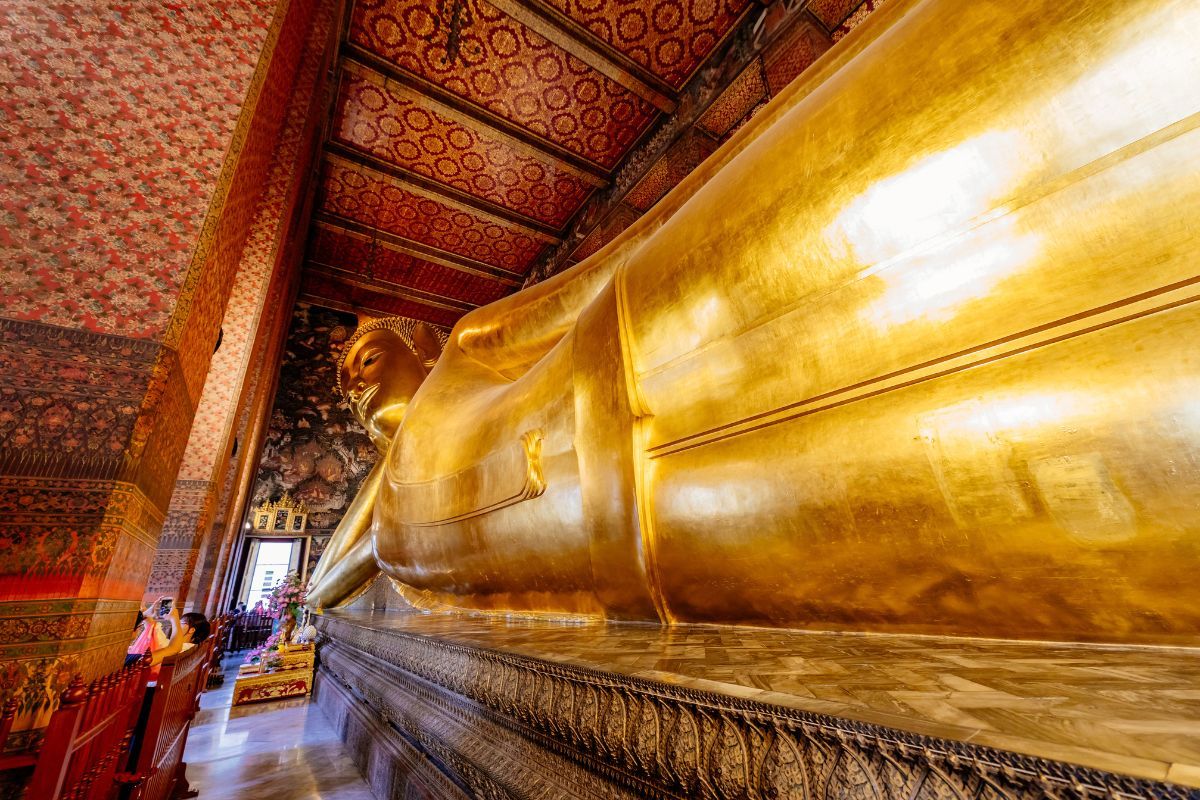
The Reclining Buddha
The highlight of Wat Pho is the majestic Reclining Buddha — a 46-meter-long, 15-meter-high statue covered in gold leaf, representing the Buddha entering nirvana. Its calm expression exudes peace, while the mother-of-pearl inlays on the feet display 108 auspicious symbols of Buddhist cosmology.
Behind the statue, you'll find 108 bronze bowls where visitors drop coins for good luck — each representing one of the Buddha's virtues. It's both a spiritual ritual and a soothing auditory experience that adds to the temple's peaceful atmosphere.
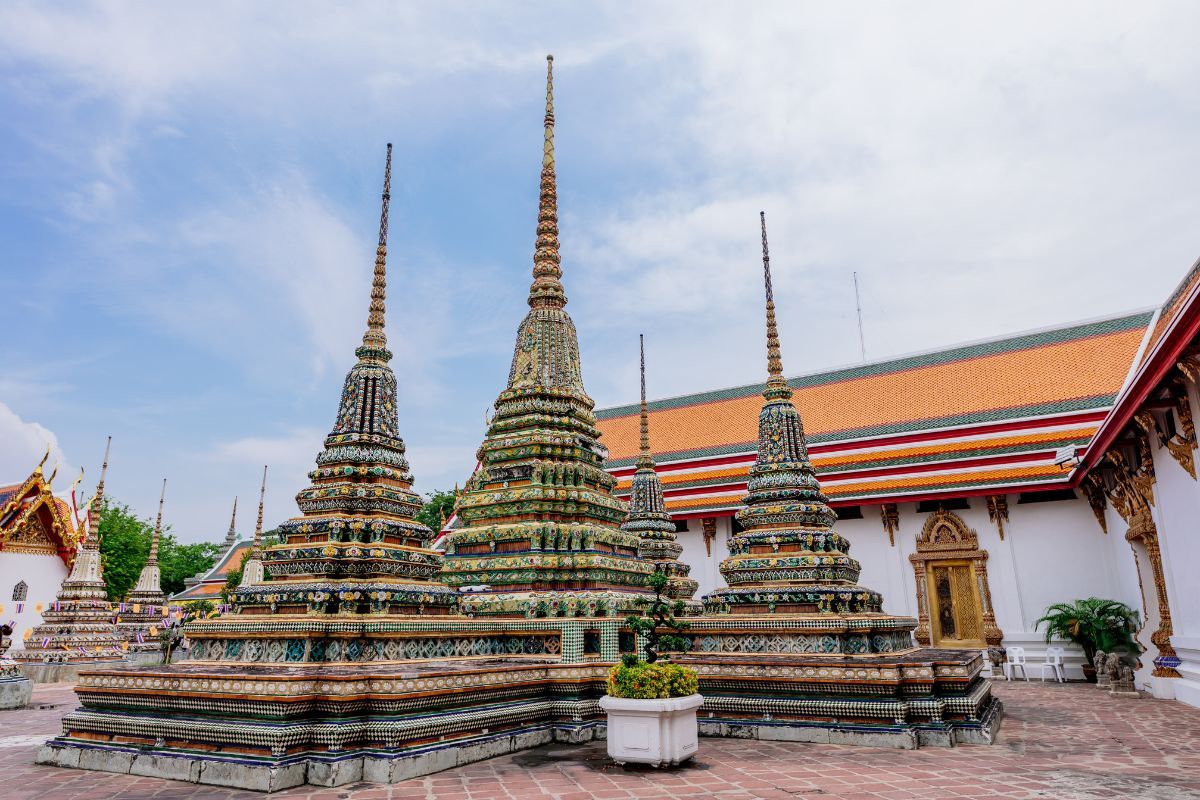
Chedis and Courtyards
Scattered across the temple grounds are 91 beautifully decorated Chedis (stupas). The four largest ones, known as Phra Maha Chedi Si Rajakarn, are dedicated to the first four kings of the Chakri Dynasty.
Their glazed ceramic tiles and intricate floral mosaics shimmer in the sunlight, creating one of the most photogenic spots in Bangkok. Walking through these courtyards offers a glimpse of classic Thai artistry blended with Chinese influence --- a vivid reflection of the kingdom's diverse heritage.
Murals, Inscriptions & Statues
The temple's inner halls and cloisters are adorned with intricate murals depicting Buddhist teachings, scenes from the Ramakien (Thailand's national epic), and daily life in old Siam.
You'll also find ancient inscriptions carved into marble pillars that detail everything from traditional medicine to yoga poses. These were once part of Thailand's first public university, where scholars studied science, religion, and the healing arts. At the entrances, Chinese guardian statues stand to watch — symbols of protection and trade from centuries past.
The Bodhi Tree Garden
For a moment of calm, step into the garden that houses a sacred Bodhi Tree — believed to be a descendant of the tree under which the Buddha attained enlightenment.
Surrounded by small Chedis and serene walkways, it's an ideal place to pause, meditate, or simply enjoy the peaceful contrast to the bustling streets outside the temple walls.
Things to Do in Wat Pho
Experience a Traditional Thai Massage
No visit to Wat Pho is complete without indulging in a traditional Thai massage at its famous Wat Pho Thai Traditional Massage School. Often called the birthplace of Thai massage, this institute continues to train therapists from all over the world.
The massages are performed using ancient acupressure and stretching techniques that improve flexibility and relieve tension. Short sessions are available for walk-in visitors, while longer courses are offered for those who wish to learn the practice themselves.
Prices are reasonable, and the experience is both authentic and rejuvenating — the perfect way to end your temple visit.
Donate for Good Luck
Inside the hall of the Reclining Buddha, you'll find 108 small bronze bowls lined up behind the statue. Visitors can purchase a set of coins and drop one into each bowl for good fortune and blessings. The rhythmic sound of the falling coins creates a tranquil background to the temple's quiet energy, making it one of the most memorable rituals at Wat Pho.
Explore the Medicine Pavilion
Another fascinating corner of Wat Pho is the Medicine Pavilion, where ancient manuscripts on Thai traditional medicine and herbal remedies are displayed.
These records once served as the foundation of Thai wellness and holistic healing. The diagrams illustrating anatomy and yoga postures were inscribed centuries ago to educate students — making this area a must-see for anyone interested in Thailand's health traditions.
Ready to explore Bangkok's most sacred temple? Discover our complete guide to all the best things to do in Wat Pho, from visiting the Reclining Buddha to experiencing traditional Thai massage and exploring the temple's rich history.
Tips for Visiting Wat Pho
- Suggested Route: Start at the main entrance near Chetuphon Road, visit the Reclining Buddha first, then explore the main chapel and courtyards, and finish with a massage session near the southern gate.
- Recommended Time: Allocate 1-2 hours for a standard visit, or up to 3 hours if including massage or photography.
- When to Visit: Early morning (8-10 AM) or late afternoon (4-6 PM) offers cooler weather and fewer visitors.
- Dress & Essentials: Wear breathable clothing, bring a hat, sunscreen, and a bottle of water.
- Photography Tips: Avoid using flash inside halls; wide-angle lenses capture the Reclining Buddha best. Be mindful not to photograph people in prayer.
- Massage Etiquette: The massage center is open from 8:00 AM - 6:00 PM. Prices start around 300-500 THB for a traditional Thai massage. Booking is first-come, first-served.
- Nearby Attractions: Combine your visit with nearby landmarks like the Grand Palace, Wat Arun (Temple of the Dawn) across the river, or a Chao Phraya river cruise for a full-day cultural experience.
Other Famous Temples to Visit in Bangkok
Wat Arun (Temple of Dawn)
One of Bangkok's most iconic landmarks, Wat Arun stands majestically along the west bank of the Chao Phraya River. Its central prang, rising nearly 70 meters high, is covered in colorful porcelain mosaics that sparkle in the sunlight. Visitors can climb partway up the spire for panoramic river views or admire the temple glowing golden at sunset. The intricate carvings, mythological figures, and symbolic design — representing Mount Meru in Buddhist cosmology — make Wat Arun a must-visit for anyone exploring the city.
Wat Phra Kaew (Temple of the Emerald Buddha)
Located within the Grand Palace, this temple houses Thailand's most revered statue — the Emerald Buddha. Every inch of the temple glitters with gold, glass mosaics, and detailed murals, showcasing the pinnacle of Thai craftsmanship and royal devotion.
Wat Saket (The Golden Mount)
Built on a man-made hill, Wat Saket features a gleaming golden chedi that offers panoramic views of Bangkok. The gentle climb up its 300 steps is lined with bells, shrines, and lush greenery, making it a peaceful yet scenic stop.
Wat Benchamabophit (The Marble Temple)
Known for its elegant design crafted from Italian Carrara marble, this temple perfectly blends Thai and European influences. Its symmetrical layout, tranquil courtyard, and iconic Buddha image make it one of the most photogenic temples in the city.
FAQs of Wat Pho Guide
Q: What is Wat Pho famous for?
A: Wat Pho is renowned for its large gold-plated Reclining Buddha statue, measuring 46 meters long and 15 meters high. It is also recognized as the origin and primary center for traditional Thai massage.
Q: Can I visit Wat Pho with kids or a stroller?
A: Yes, though some pathways are uneven. Early morning visits are best to avoid heat and crowds.
Q: What are the opening hours?
A: Wat Pho is generally open every day from 8:00 AM to 6:30 PM. The massage school may have slightly different hours, so it's best to check on the day.
Q: Can I take photos inside the temple?
A: Photography is allowed, but no flash inside the main chapels. Always be respectful of people praying.
Q: What are the best times to visit?
Visiting in the early morning or late afternoon is suggested to avoid crowds and heat.
Q: Is Wat Pho near the Grand Palace?
A: Yes, it is a short walk south of the Grand Palace, allowing for visits to both sites.