Wat Arun, also known as the Temple of Dawn, is one of the most recognizable landmarks in Bangkok, Thailand. Standing majestically on the west bank of the Chao Phraya River, its glittering spires shimmer in the sunlight, earning it the name "Temple of Dawn." The temple is dedicated to Aruna, the Hindu god of dawn, symbolizing the birth of a new day.
Beyond its stunning architecture, Wat Arun Bangkok remains an active Buddhist temple, offering a glimpse into Thailand's spiritual traditions. For travelers, it's not just a sightseeing stop — it's a serene riverside experience filled with beauty, history, and peace. This Wat Arun travel guide covers everything you need to know: from architecture and best photography spots to visitor tips and nearby attractions.
History & Cultural Significance
Wat Arun dates back to the Ayutthaya period, long before Bangkok became Thailand's capital. It gained significance after King Taksin established Thonburi as his capital in 1767, following Ayutthaya's fall. Legend says he arrived here at dawn and vowed to restore the temple, inspiring the name "Temple of Dawn." Later, during the reigns of King Rama II and King Rama III, Wat Arun underwent major renovations, including the construction of its iconic central spire. Today, it stands as a masterpiece of royal craftsmanship and spiritual symbolism, with the prang representing Mount Meru, the mythical center of the universe.
Architecture & Design
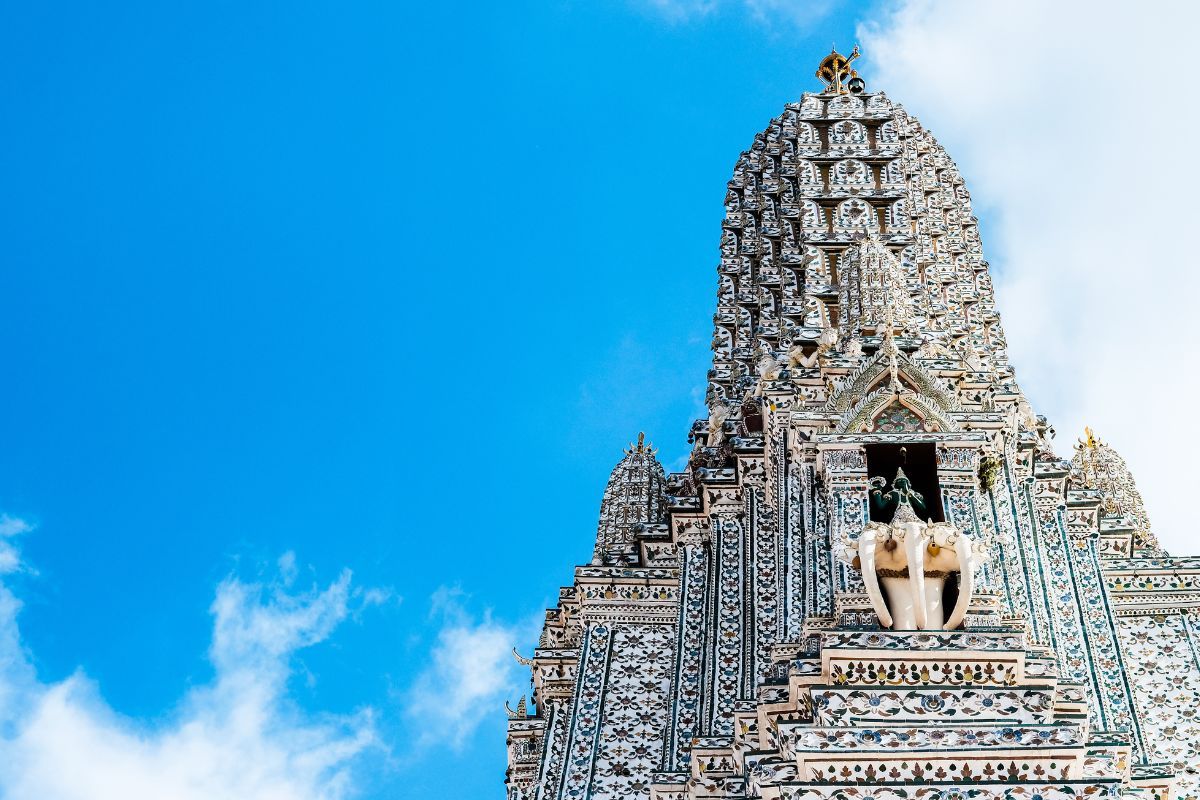
The temple's centerpiece is its main prang (central spire), soaring nearly 70 meters high and flanked by four smaller prangs. This Khmer-style design is covered with intricate mosaics of porcelain, seashells, and colored glass, which sparkle beautifully in the sun.
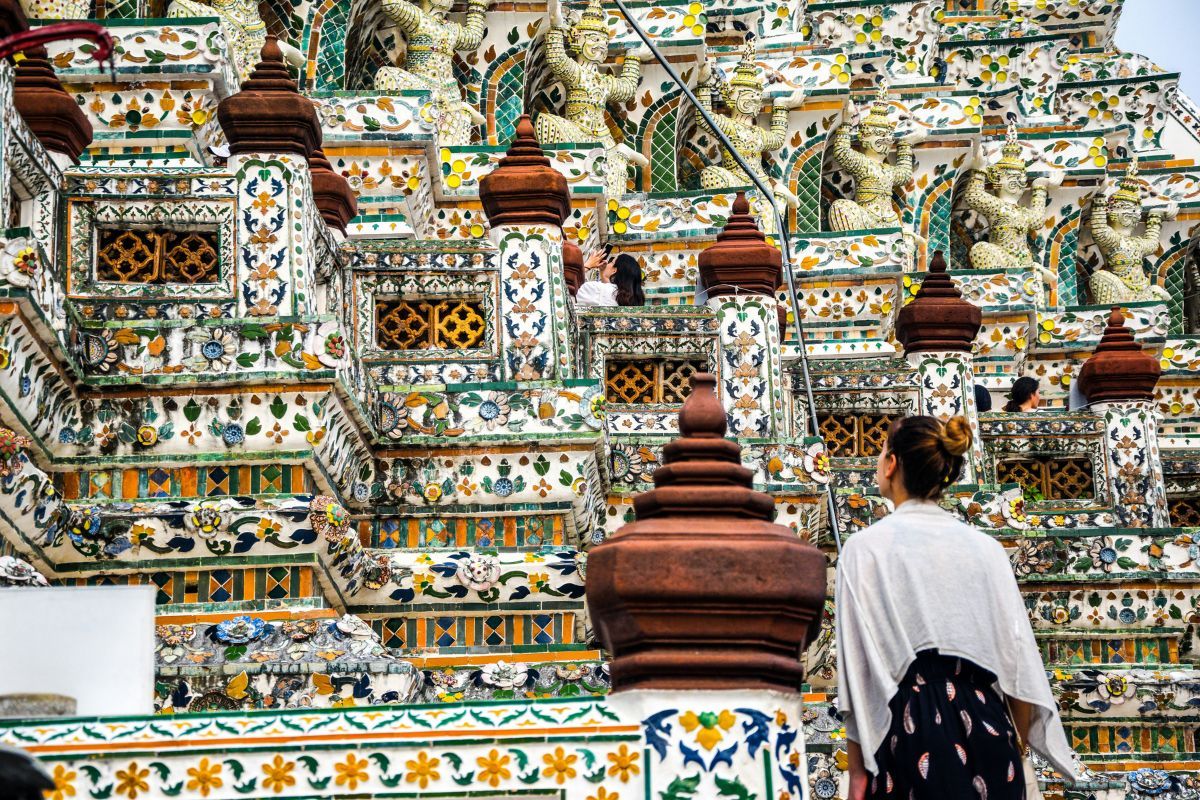
Each tier of the prang represents different realms of Buddhist cosmology, and you'll find sculptures of mythical figures, demons (Yaksha), and guardian deities throughout. The smaller prangs at the corners are dedicated to the wind god Phra Phai, adding to the temple's celestial theme.
Visitors can climb partway up the central prang to admire the panoramic views of the river, Wat Pho, and the Grand Palace across the water. The steep stairs are a bit challenging but worth it for the breathtaking perspective. At sunset, the temple glows in golden hues — a sight that truly captures its title, Temple of Dawn.
Highlights of Wat Arun
Iconic Landmark of Bangkok
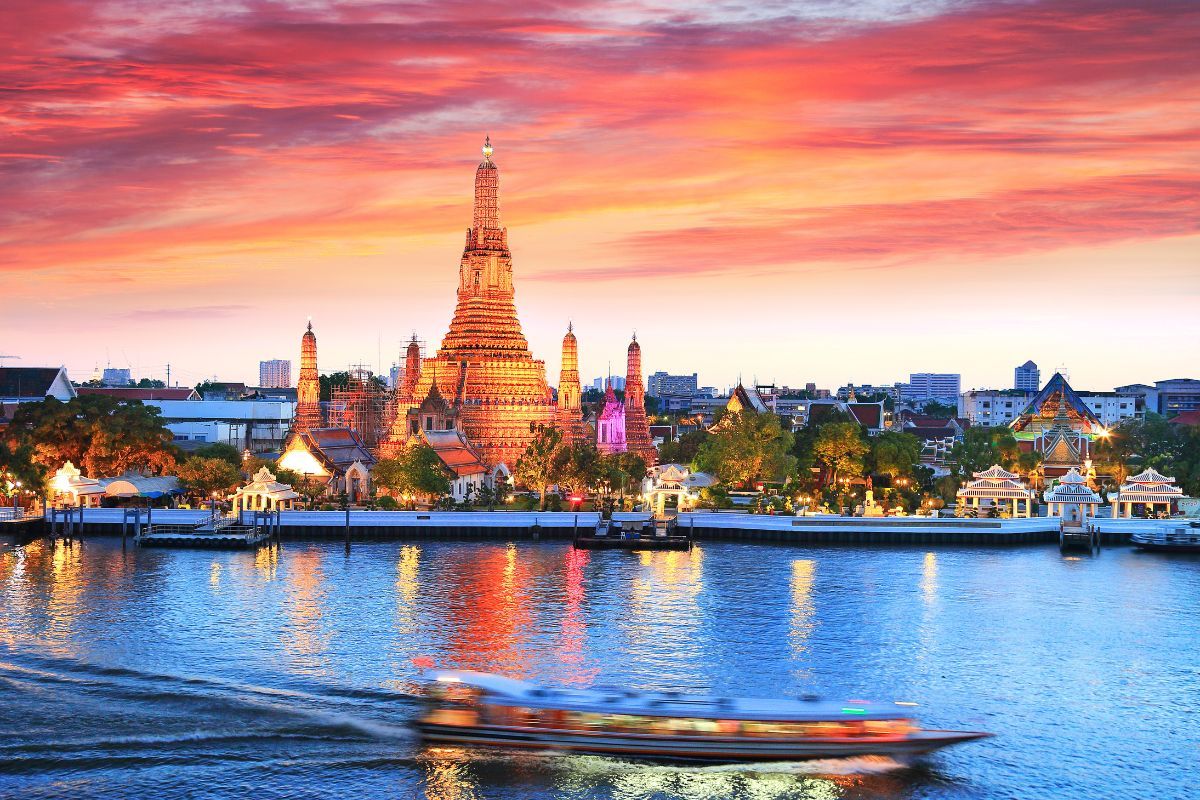
Known as the Temple of Dawn, Wat Arun is one of Thailand's most recognizable symbols, located beautifully along the west bank of the Chao Phraya River. Its distinctive prang (spire) glows in golden light at sunrise and sparkles when illuminated at night.
Majestic Central Spire (Prang)
Standing at about 70 meters tall, the central spire is decorated with colorful porcelain and seashell mosaics that shimmer under sunlight. Visitors can climb partway up the steep staircase for panoramic views of Bangkok and the river.
Intricate Architectural Details
Every part of Wat Arun showcases exquisite craftsmanship — from guardian statues and ornate pagodas to pavilions designed in Chinese style. The temple's decorations blend Thai and Khmer influences, representing Mount Meru, the center of the universe in Buddhist cosmology.
Religious & Artistic Significance
Inside the Ordination Hall (Ubosot), visitors will find a golden Buddha image and murals depicting scenes from the life of the Buddha. The temple remains an active place of worship for Thai Buddhists and a testament to Thailand's rich artistic heritage.
Scenic Riverside Views
The temple's riverfront setting makes it one of Bangkok's most picturesque attractions. From the grounds, visitors can watch boats passing along the Chao Phraya, or cross the river for stunning views of Wat Arun from cafés and rooftops on the opposite bank.
Cultural Experience
Wat Arun is often included in Bangkok temple tours, alongside Wat Pho and Wat Phra Kaew, offering travelers a complete cultural journey through Thailand's spiritual heart.
How to get to Wat Arun
Wat Arun sits gracefully on the west bank of the Chao Phraya River, directly opposite Wat Pho and near the Grand Palace.
By Ferry
The easiest and most scenic route is to take a short ferry from Tha Tien Pier (across from Wat Pho). The crossing takes just 3-5 minutes and costs 5-10 THB.
By Boat
From central Bangkok, take the BTS Skytrain to Saphan Taksin Station (Exit 2), then board the Chao Phraya Express Boat to Tha Tien Pier, where you can transfer to the ferry across to Wat Arun Pier.
By Taxi or Tuk-Tuk
If you're staying nearby, taxis or tuk-tuks can drop you at the entrance. Note that traffic can be heavy during rush hours.
Tip: Combine Wat Arun with visits to Wat Pho and the Grand Palace in a single day using the ferry — it's efficient, cheap, and scenic.
Best Time to Visit Wat Arun
The best time to visit Wat Arun depends on what kind of experience you're looking for:
- Early morning (8:00-10:00 AM): Cooler weather and fewer crowds.
- Late afternoon (4:30-6:00 PM): Ideal for sunset photography and seeing the temple illuminated at dusk.
- Best season: Between November and February, during Bangkok's cool, dry season, for the most comfortable weather and clear skies.
Avoid visiting during midday when temperatures peak. The temple's porcelain decorations shine brightest under soft, natural light — especially at dawn or sunset.
Tips for visiting Wat Arun
Views & Photography Spots
Photography lovers will find Wat Arun Bangkok a dream location.
- Climb the central prang: Capture panoramic shots of the Chao Phraya River and city skyline.
- Across the river: The best photos of the entire temple are taken from The Deck by Arun Residence, Eagle Nest Rooftop Bar, or Sala Arun Hotel.
- On the ferry: Snap pictures as you cross the river — the prang rising behind the boats makes for a stunning shot.
- Nighttime shots: Visit after sunset to see the temple beautifully illuminated against the dark sky.
Special Tip: Use a tripod for night photography and respect temple rules — avoid obstructing pathways or photographing monks without permission.
Dress Code & Visitor Etiquette
Because Wat Arun is an active place of worship, modest dress is required:
- Shoulders and knees must be covered.
- No sleeveless tops, shorts, or mini-skirts.
- Lightweight long pants or skirts and covered shirts are ideal.
- Shoes must be removed before entering sacred areas.
Special Tip: If you forget proper attire, nearby vendors rent sarongs or wraps for a small fee. Be respectful during prayers, avoid loud conversation, and don't climb or sit on religious structures.
Visiting Information
- Opening hours: 8:00 AM - 6:00 PM daily
- Entrance fee: 100 THB for foreign tourists (free for Thai citizens)
- Average visit duration: 1-1.5 hours
- Facilities: Toilets, drinking water stalls, and shaded rest areas available
- Accessibility: The climb up the prang involves steep stairs — not recommended for those with mobility issues.
- Local tip: Bring small cash for the ferry and entry fees — many smaller vendors don't accept cards.
Other Famous Temples to Visit in Bangkok
1. Wat Pho (Temple of the Reclining Buddha)
Located just across the Chao Phraya River from Wat Arun, Wat Pho is home to the enormous 46-meter-long Reclining Buddha covered in gold leaf. It's one of Bangkok's oldest and most revered temples, also famous as the birthplace of traditional Thai massage. Visitors can stroll through peaceful courtyards filled with hundreds of Buddha images and enjoy an authentic Thai massage within the temple grounds.
2. Wat Phra Kaew (Temple of the Emerald Buddha)
Situated within the Grand Palace complex, Wat Phra Kaew is considered Thailand's most sacred temple. It houses the Emerald Buddha, a small yet highly revered statue carved from a single block of jade. The temple's detailed murals, glittering mosaics, and ornate rooftops showcase the finest example of Thai royal architecture.
3. Wat Saket (The Golden Mount)
Built atop an artificial hill, Wat Saket offers panoramic views of Bangkok from its golden chedi (stupa). Visitors climb about 300 gentle steps surrounded by bells, trees, and shrines before reaching the summit, where a peaceful atmosphere and stunning cityscape await. It's especially beautiful at sunset.
4. Wat Benchamabophit (The Marble Temple)
Known for its elegant design made from Italian Carrara marble, Wat Benchamabophit blends Thai and European architectural styles. The temple is home to beautifully carved windows, serene courtyards, and a Buddha image cast from the famous Phra Phuttha Chinnarat of Phitsanulok.
5. Wat Traimit (Temple of the Golden Buddha)
Located near Chinatown, Wat Traimit houses the world's largest solid-gold Buddha image, weighing over five tons. The temple also features a small museum that tells the fascinating story of how the statue was rediscovered after being hidden under plaster for centuries.
FAQs of Wat Arun Guide
Q: What is Wat Arun famous for?
A: Wat Arun, also known as the Temple of Dawn, is one of Bangkok's most iconic landmarks. It's famous for its stunning central spire (prang) decorated with colorful porcelain tiles and seashells that glisten beautifully under sunlight, especially at sunrise and sunset.
Q: Where is Wat Arun located?
A: Wat Arun is situated on the west bank of the Chao Phraya River, directly opposite Wat Pho and the Grand Palace. The easiest way to reach it is by taking a short ferry ride from Tha Tien Pier.
Q: What are the opening hours of Wat Arun?
A: The temple is open daily from 8:00 AM to 6:00 PM. Early morning or late afternoon visits are recommended for fewer crowds and better lighting for photos.
Q: How much is the entrance fee?
A: Entrance to Wat Arun costs around 50 THB for foreign visitors. Thai nationals can enter free of charge.
Q: Are there restaurants or cafés nearby?
Yes, the opposite riverbank has several riverside cafés and rooftop restaurants offering beautiful sunset views of Wat Arun. Popular spots include The Deck by Arun Residence and Supanniga Eating Room by the River.
Q: Can I take photos inside Wat Arun?
A: Photography is allowed in most areas of the temple, but visitors should be respectful. Avoid using flash in sacred halls or during religious ceremonies.