If you’re planning to use public transport in Bangkok, you’ll quickly come across the Rabbit Card. Many travelers assume it works everywhere, but in reality, it’s designed for specific routes and use cases. Understanding what the Rabbit Card is, where it works, and where it does not will help you decide whether it’s worth getting for your trip.
This guide explains how the Rabbit Card works, compares it with other transport payment options in Bangkok, and helps you decide if it fits your itinerary.
What Is the Rabbit Card?
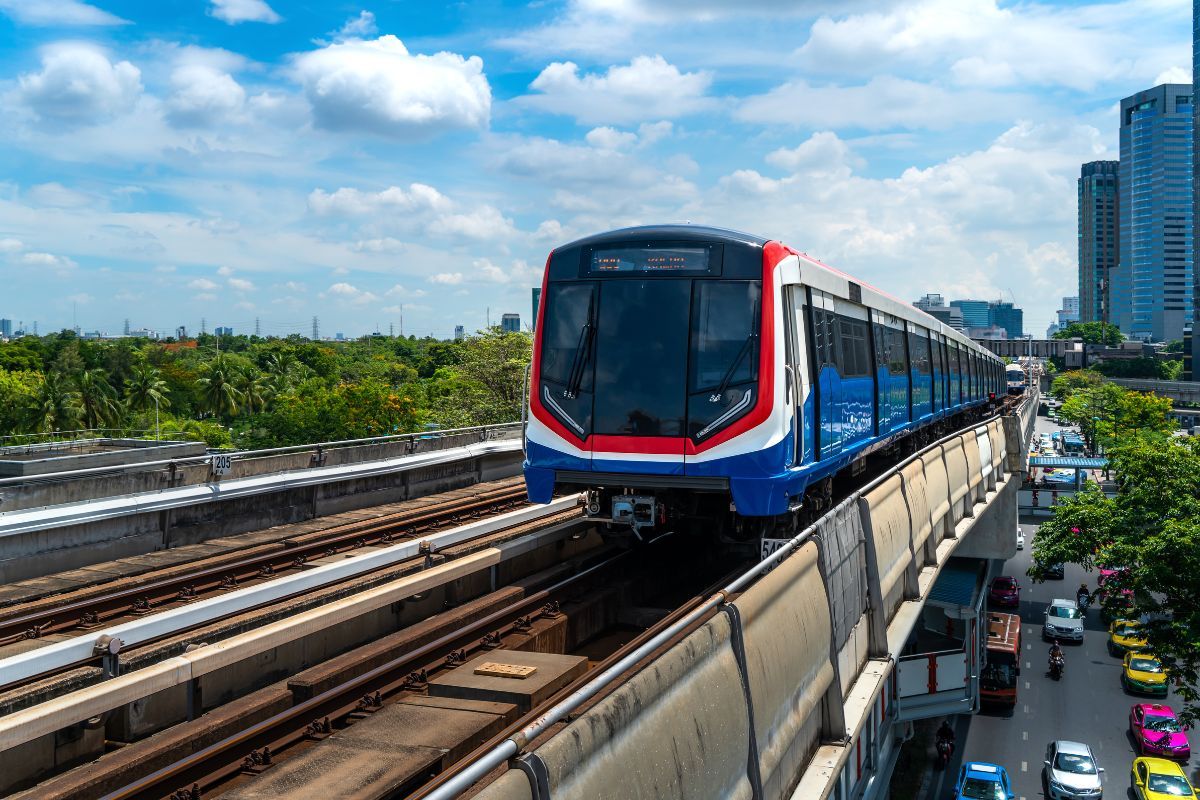
The Rabbit Card is a stored-value smart card used mainly for cashless travel on the BTS Skytrain. Instead of buying single-journey tickets each time, you preload money onto the card and tap in and out at the gates.
Originally created for daily commuters, the Rabbit Card has expanded beyond transport and can also be used for payments at selected shops, cafes, and restaurants around Bangkok.
What Can You Use the Rabbit Card For?
The Rabbit Card has evolved from a simple transit pass into a versatile ""e-wallet"" for Bangkok. While its primary purpose is moving you through the city's heavy traffic, it is increasingly used as a quick payment method for daily errands.
1. Using Rabbit Card for Transportation
The Rabbit Card operates on a ""Tap-and-Go"" system. You do not need to select your destination at a kiosk; the system calculates the fare from your entry point to your exit point automatically.
The Transit Network:
- The BTS Green Lines: This includes the entire Sukhumvit Line (from Khu Khot to Kheha) and the Silom Line (from National Stadium to Bang Wa). These lines cover major hubs like Siam, Asok, and Victory Monument.
- The Gold Line: The automated people mover that connects the BTS Silom Line to ICONSIAM shopping mall and the Thon Buri district.
- The New Monorails: You can now use the Rabbit Card on the MRT Yellow Line (Lat Phrao to Samrong) and the MRT Pink Line (Khae Rai to Min Buri).
- Bus Rapid Transit (BRT): The dedicated bus lane running from Sathon to Ratchaphruek.
- Water Transport: It is accepted on the Chao Phraya Tourist Boat (Blue Flag) and certain Chao Phraya Express Boats, making it useful for visiting the Grand Palace or Wat Arun.
Pro Tip: While it works on the Yellow and Pink ""MRT"" lines, it still does not work on the MRT Blue (Subway) or Purple lines. You will need a separate MRT card or a contactless credit card for those.
2. Using Rabbit Card for Shopping and Dining
The Rabbit Card is a popular alternative to cash for ""micro-payments""---small transactions where digging for coins is a hassle. Many merchants offer exclusive discounts or ""Rabbit Rewards"" points when you pay with the card.
Where You Can Spend Your Balance:
- Convenience Stores: While 7-Eleven does not accept Rabbit Card (they use their own All Member system), you can use it at Lawson 108, Turtle Shop (located on BTS platforms), and FamilyMart.
- Fast Food & Dining: Major international and local chains accept it, including:
- McDonald's, Burger King, and KFC
- Subway and Taco Bell
- Dairy Queen and Swensen's
- Cafes & Bakeries: It is very common in high-traffic spots like Starbucks, The Coffee Club, BreadTalk, and Auntie Anne's.
- Supermarkets: You can use the card at Gourmet Market and Mini Big C.
- Food Courts: Many mall food courts (like those in Siam Center or Siam Paragon) allow you to pay directly with the Rabbit Card instead of buying their specific venue coupons.
3. Rabbit Rewards Program
One major detail often overlooked is Rabbit Rewards. By linking your card to the ""Rabbit Rewards"" app, every baht spent on BTS fares or at shops earns points. These points can be redeemed for:
- Free BTS trips.
- Buy-one-get-one-free coffee vouchers.
- Discounts at retail partners like Sephora or JD Central.
Where the Rabbit Card Does Not Work
This is where many travelers get confused.
The Rabbit Card does not work on the MRT Blue Line, which serves areas such as Chinatown, Hua Lamphong, and parts of the Old Town.
It also cannot be used on:
Airport Rail Link
Bangkok public buses
Most river ferries and canal boats
If your itinerary relies heavily on MRT lines or airport connections, the Rabbit Card alone will not be sufficient.
What Do the Different Colors of Rabbit Card Mean?
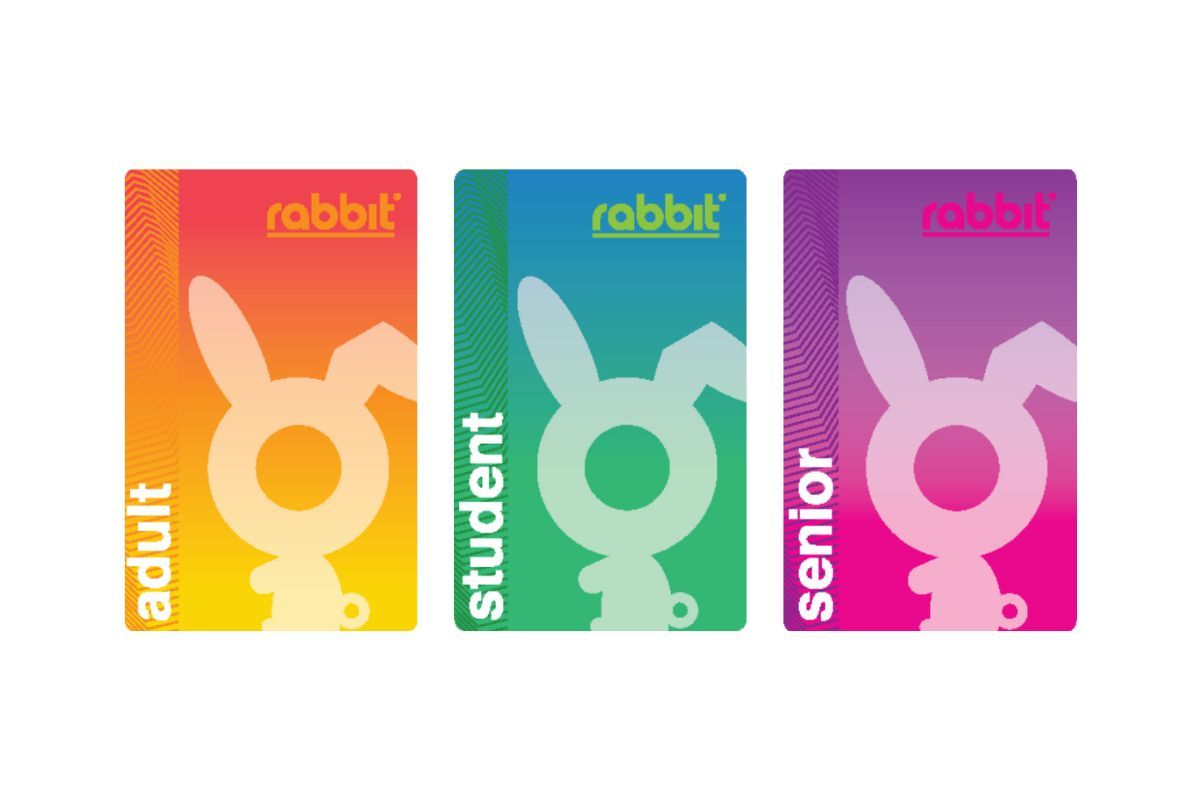
The Rabbit Card comes in several colors and designs, but for most travelers, the color is mainly about card type or design, not how the card works. All Rabbit Cards function the same way on the BTS Skytrain unless they are issued under special eligibility rules.
Standard Rabbit Card (Most Common for Tourists)
The standard Rabbit Card is the version most visitors will see and use. It is available in various colors and designs, including simple solid colors and branded or seasonal artwork.
Available to anyone, including tourists
No discounts attached
Works on all BTS Skytrain lines
Can be topped up and used like a stored-value card
For tourists, this is the recommended and easiest option, regardless of color or design.
Student Rabbit Card
Student Rabbit Cards are usually a different color or clearly labeled and are issued under specific eligibility rules.
Discounted fares for eligible students
Requires proof of student status and Thai documentation
Not available to most tourists
Even if the design looks appealing, tourists cannot use student cards unless they meet the eligibility requirements.
Senior Rabbit Card
Senior Rabbit Cards are designed for elderly Thai residents and are often marked with distinct colors or symbols.
Special fare benefits for seniors
Requires age verification and Thai ID
Not available to tourists
These cards offer reduced fares but are not intended for visitor use.
Promotional & Limited-Edition Rabbit Cards
From time to time, BTS releases promotional or limited-edition Rabbit Cards featuring popular characters, brands, festivals, or events. These cards may come in unique colors or designs.
Function exactly the same as standard Rabbit Cards
Usually priced slightly higher due to design
Can be used by tourists if sold at BTS stations
Many travelers buy these as souvenirs, since the design does not affect fares or usability.
Rabbit Card vs Other Bangkok Transport Payment Options
Rabbit Card vs Mangmoom Card
The Mangmoom Card is designed for MRT-operated lines, including the Blue, Purple, Pink, and Yellow lines. Unlike the Rabbit Card, it does not work on BTS.
In simple terms:
Rabbit Card is best for BTS travel
Mangmoom Card is best for MRT travel
They are not interchangeable.
Rabbit Card vs Contactless Credit or Debit Cards
On some MRT lines, travelers can tap contactless Visa or Mastercard directly at the gates. This is convenient for short visits, especially if you already use contactless payments.
However, contactless bank cards do not work on BTS. For frequent BTS users, Rabbit Card remains the more practical option.
Rabbit Card vs Single-Journey Tickets
Single-journey tickets are fine if you only ride occasionally. However, they require queuing at ticket machines and estimating fares each time.
The Rabbit Card saves time by letting you:
Skip ticket queues
Enter stations faster
Avoid handling small coins
Who Should Buy a Rabbit Card?
For those navigating Bangkok's heat and traffic, the Rabbit Card is less of a luxury and more of a survival tool. Here is a detailed breakdown of who gains the most value from owning one.
The ""Must-Buy"" Group: Who Should Get It?
- The ""Sukhumvit Explorer"": If your hotel or Airbnb is located along the Sukhumvit Line (Siam, Nana, Asok, Thong Lo, Ekkamai), the Rabbit Card is essential. These areas are notorious for gridlock; the BTS is the only reliable way to move quickly between these hubs.
- The Multi-Day Tourist: If you are in Bangkok for 3 days or more, the 100 THB issuing fee is quickly ""repaid"" in saved time. Queues for single-trip tickets at stations like Siam or Mo Chit can take 15--20 minutes during rush hour or weekend afternoons.
- The Budget-Conscious Commuter: Unlike single-journey tickets, the Rabbit Card allows you to earn Rabbit Rewards points via the Rabbit Rewards App. These points can be traded for free BTS trips or discounts at Gourmet Market and various food outlets.
- The ""Island Hopper"" (River Travelers): If you plan to visit Wat Arun, the Grand Palace, or ICONSIAM, the Rabbit Card works on the Chao Phraya Tourist Boat. Having one card for both the train and the boat simplifies your logistics significantly.
- The Digital Nomad: If you frequently work from cafes or grab quick meals at Starbucks, The Coffee Club, or Subway, the card doubles as a secure e-wallet, reducing the need to carry stacks of small 20-baht notes.
The ""Pass"" Group: Who Should Skip It?
- The Riverside or Old Town Resident: If you are staying in Chinatown (Yaowarat) or near the Old City (Phra Nakhon), you will likely use the MRT Blue Line or taxis. The Rabbit Card does not work on the subway, making it mostly useless for your neighborhood.
- The One-Day Visitor: If you are just passing through for 24 hours to see one specific sight, the 100 THB non-refundable fee isn't worth it. Just use the ticket machines.
- The Luxury Traveler: If you plan to use Grab or private cars for every journey, you won't need a transit card. However, be warned: a 2-km trip in a taxi can take 45 minutes in Bangkok's peak traffic, whereas the BTS takes 4 minutes.
- The Contactless Card User (MRT Only): If you already have a Contactless Visa or Mastercard, you can tap-and-go on the MRT Blue/Purple lines and some buses. Since these cards still do not work on the BTS, you might feel ""covered"" enough without a Rabbit Card if you avoid the Green lines.
How to Buy a Rabbit Card
Where to Purchase
You can obtain a Rabbit Card at:
BTS Skytrain ticket offices at any station
Designated transit counters (such as BRT and select MRT lines)
Authorized partners in some cases or in advance through online booking partners
Foreign visitors must present a valid passport when purchasing the card.
Card Issuance and Fees
The standard issuance fee is 100 Baht, which covers the production of the card itself.
You then add stored value or trip credits on top of the fee to use the card for travel and payments.
How to Add Value and Use Rabbit Card
Adding Stored Value
Minimum top-up amount: 100 Baht
Maximum stored value on the card: 4,000 Baht
Stored value can be added at BTS ticket offices, vending machines, and other authorized top-up locations.
Topping Up Through the App
You can also tie your Rabbit Card to mobile apps like My Rabbit or supported e-wallets (e.g., LINE Pay) to reload value directly from your smartphone.
How to Use the Rabbit Card
When riding the BTS Skytrain, simply:
Tap your Rabbit Card at the entry gate - the gate will open once your card is read.
Tap your Rabbit Card again at the exit gate - your fare will be automatically deducted based on the trip distance.
Benefits of the Rabbit Card
Convenience
Skip ticket queues by using a single reusable card for all BTS rides.
Tap in/out quickly at station gates without buying single-journey tickets each time.
Cashless Payments
- Use the same card to pay for small purchases at merchants that accept Rabbit Pay.
Long Validity
- A Rabbit Card remains valid for up to seven years from the date of issue, giving long-term users plenty of time to reuse it on future trips.
Things to Know Before You Buy Rabbit Card
Fare Discounts
Card types such as Student or Senior rabbit cards may be eligible for fare discounts based on promotions and card policy.
Stored Value Expiry
Stored value on the card is valid for a set period from the date of the last transaction (often two years), after which unused credit may expire.
Read more
Pros and Cons of Using the Rabbit Card
Advantages
Faster access to BTS stations
No need to buy tickets each ride
Can be used for small purchases at partner shops
Disadvantages
Limited to BTS lines
Not valid on MRT Blue Line or airport trains
Not ideal for all travel routes in Bangkok
For full details or specific questions about the Rabbit Card, visit the official BTS information page on the BTS website. To plan your routes more easily, you can also explore our guides to Wat Pho, Wat Phra Kaew, and Chatuchak Market for the best transport options and visiting times.