Bangkok's MRT (รถไฟฟ้ามหานคร) is the city's underground-led rapid transit network, distinct from the elevated BTS Skytrain. The system currently has four active lines — the Blue, Purple, Yellow, and Pink — with the Blue Line forming the backbone most relevant to tourists. Blue Line fares run from THB 17 to THB 45 per journey, while Purple Line fares range from THB 14 to THB 42. Trains operate daily from 05:30 to midnight on weekdays and from 06:00 to midnight on weekends and public holidays.
What the Bangkok MRT Map Shows
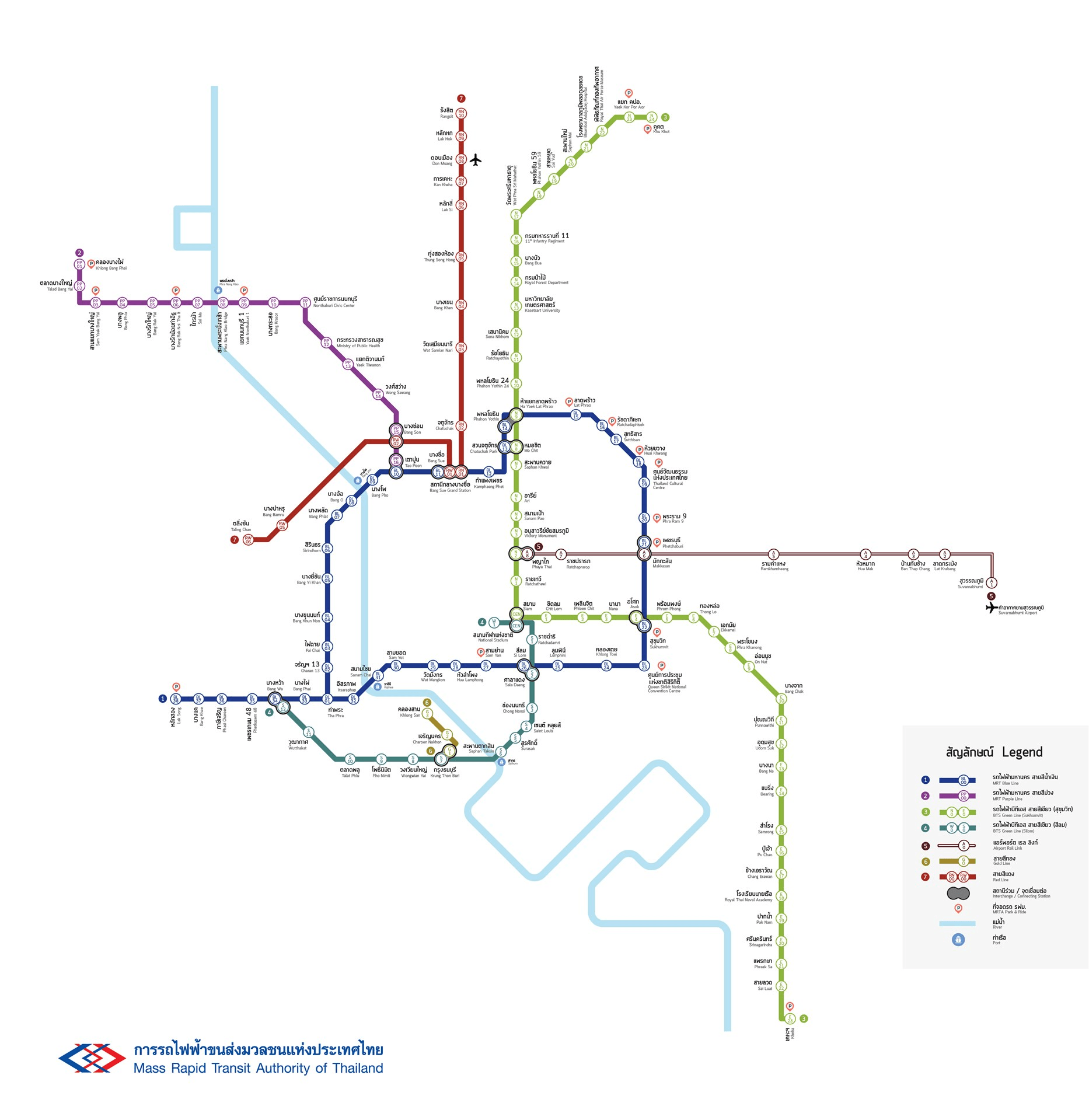
A key thing to understand before reading any Bangkok MRT map: the Yellow Line and Pink Line are technically monorail SkyTrain systems — even though they fall under the MRT brand, they operate on separate ticketing from the Blue and Purple Lines. Each line on the map uses a distinct colour and station-code prefix (BL, PP, YL, PK) to make navigation easier.
The Four MRT Lines at a Glance
| Line | Type | Key Termini | Stations | Best For |
|---|---|---|---|---|
| Blue Line | Underground / Elevated loop | Tha Phra ↔ Tha Phra (loop) | 38 | Temples, Chinatown, CBD, Chatuchak |
| Purple Line | Elevated | Tao Poon ↔ Khlong Bang Phai | 16 | Northern suburbs, Bang Sue Grand Station |
| Yellow Line | Elevated monorail | Lat Phrao ↔ Samrong | 23 | Eastern districts, shopping malls |
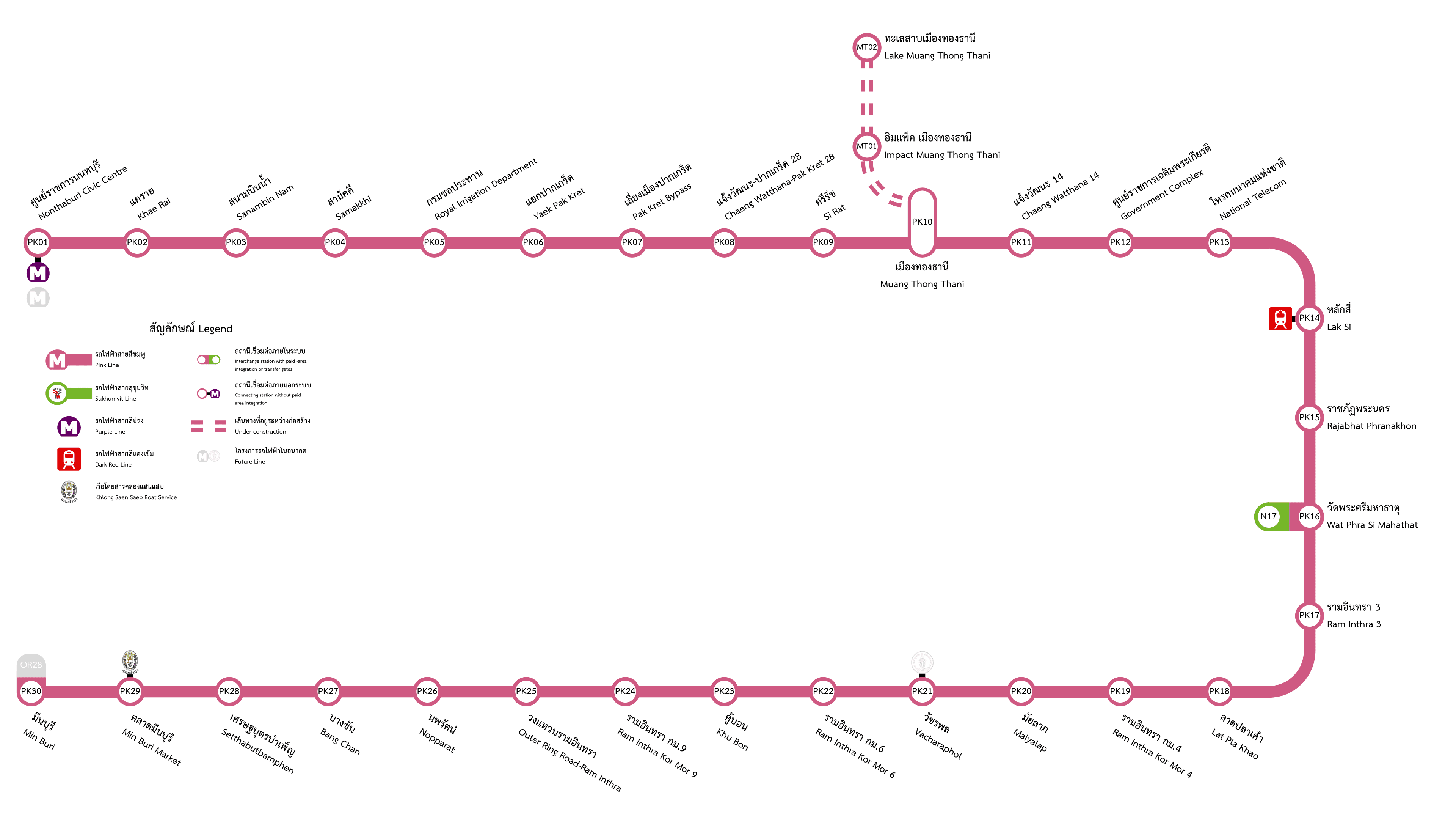
| Pink Line | Elevated monorail | Nonthaburi Civic Center ↔ Min Buri | 32 | Northern suburbs, Impact Arena |
MRT Blue Line Map: The Tourist Essential
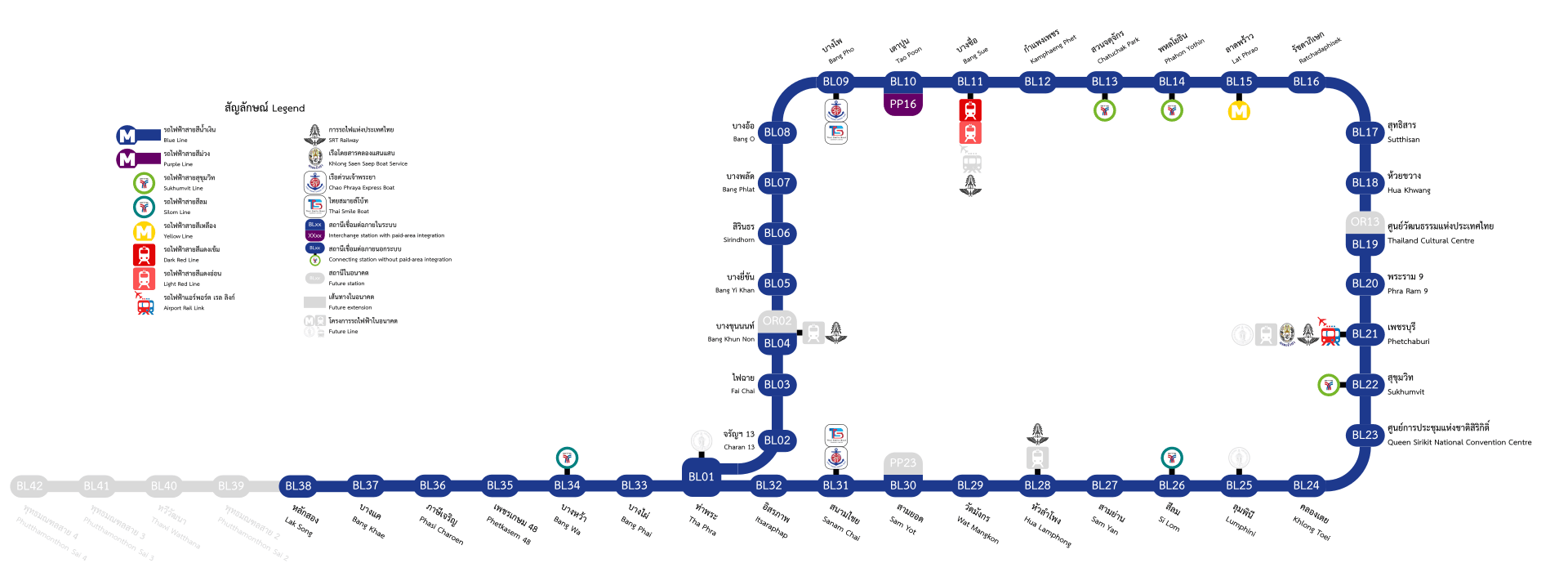
The loop structure means you can travel in either direction between two points. Always check the station code (BL01–BL38) on the platform screens to confirm your train's direction before boarding.
Key Blue Line Stations for Tourists
| Station | Code | Why You Need It |
|---|---|---|
| Chatuchak Park | BL13 | Direct interchange to BTS Mo Chit; entry to Chatuchak Market |
| Sukhumvit | BL22 | Interchange with BTS Asok; Sukhumvit nightlife and dining hub |
| Silom | BL26 | Interchange with BTS Sala Daeng; financial district |
| Lumphini | BL25 | Nearest MRT stop to Lumpini Park |
| Wat Mangkon | BL29 | Gateway to Yaowarat Road and Chinatown street food |
| Sam Yot | BL30 | Sampheng Market, Phahurat, Old Town |
| Sanam Chai | BL31 | Closest MRT station to Wat Pho, the Grand Palace, and Wat Phra Kaew |
| Hua Lamphong | BL28 | Old Bangkok rail terminus; edge of Chinatown |
| Phetchaburi | BL21 | Airport Rail Link interchange for Suvarnabhumi Airport |
Sanam Chai is the most useful station for temple-hopping — it sits closest to Wat Pho and the Grand Palace, and a short ferry from the nearby Rajinee Pier (N7) takes you across the river to Wat Arun.
Wat Mangkon station is the best entry point for Chinatown, placing you directly on Yaowarat Road near Bangkok's most famous street-food vendors and the I'm Chinatown Shopping Center.
For the weekend market, Chatuchak Park station (BL13) sits directly on the Blue Line with a BTS Sukhumvit Line interchange, making it easy to reach from almost anywhere in the city. See our full Chatuchak Market map for navigating the 15,000+ stalls once you arrive.
MRT Purple Line Map
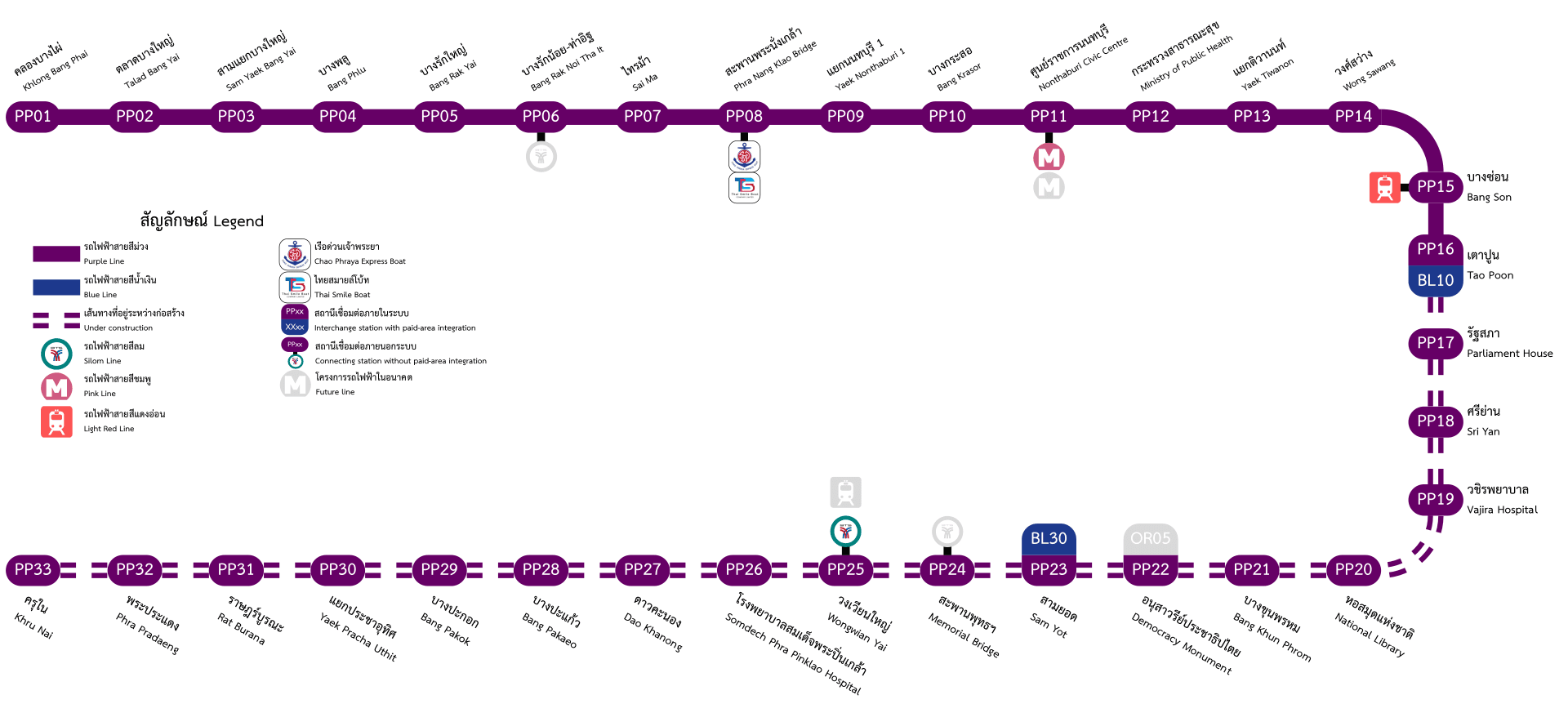
From 1 December 2025, the Purple Line introduced a THB 40 all-day cap when paying by EMV contactless card, valid until 30 November 2026. That makes it genuinely good value for a day of exploring Nonthaburi.
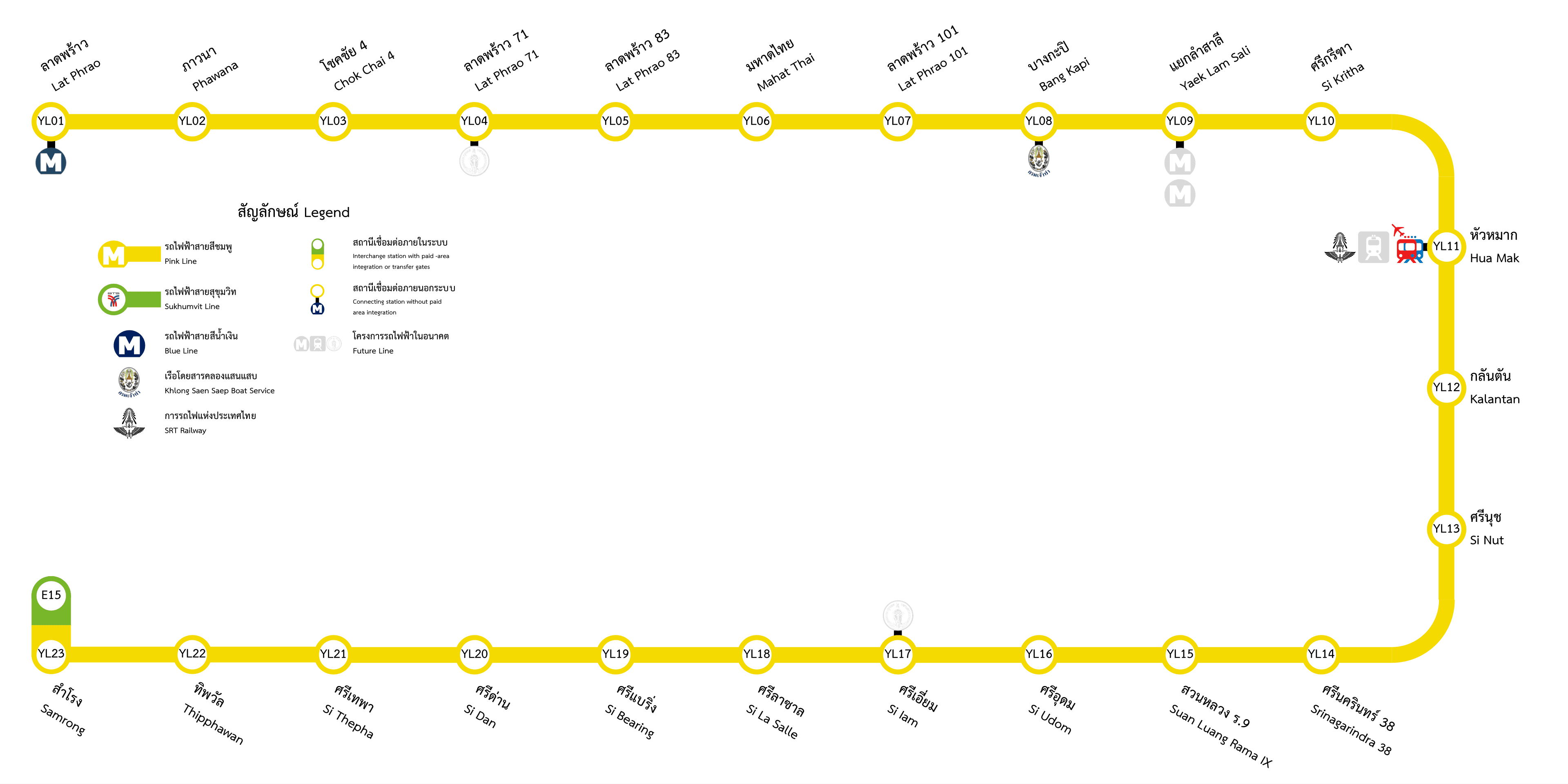
MRT Yellow Line Map
MRT Pink Line Map
How to Read Interchange Points on the Bangkok MRT Map
The most confusing part of any Bangkok rail map is the interchange system. Because the MRT and BTS are operated by separate entities, you must exit the fare gates and purchase a new ticket when switching between systems — your single journey token or card credit does not transfer.
The main interchange hubs to know:
| MRT Station | Connects To | Line |
|---|---|---|
| Chatuchak Park (BL13) | Mo Chit | BTS Sukhumvit |
| Phahon Yothin (BL12) | Ha Yaek Lat Phrao | BTS Sukhumvit |
| Sukhumvit (BL22) | Asok | BTS Sukhumvit |
| Silom (BL26) | Sala Daeng | BTS Silom |
| Phetchaburi (BL21) | Makkasan | Airport Rail Link |
| Tao Poon (BL10/PP16) | Purple Line | MRT Purple |
| Lat Phrao (BL15/YL01) | Yellow Line | MRT Yellow |
For a broader overview of how MRT fits into Bangkok's full transit picture, our guide to the best way to get around Bangkok covers taxis, tuk-tuks, boats, and BTS comparisons side by side.
MRT Fares and Tickets in 2026
Blue Line fares start at THB 17 and reach a maximum of THB 45 for a single journey, with increases calculated by distance. If your trip requires a Blue-to-Purple Line transfer, the combined fare can reach up to THB 73.
As of June 2026, the traditional MRT and MRT Plus stored-value cards have been permanently retired. Top-ups ended on 1 April 2026, and the cards stopped working entirely on 1 June 2026. The system has now fully transitioned to EMV contactless payment.
| Ticket Type | Where to Buy | Accepted Lines | Notes |
|---|---|---|---|
| Single-journey token | Station vending machines (cash only) | Blue & Purple | Valid day of purchase only |
| EMV contactless bank card | Tap your own Visa / Mastercard / UnionPay at the gate | Blue & Purple | Fastest option for most foreign visitors |
| Mangmoom EMV Card | Station ticket offices | Blue, Purple, Pink & Yellow | Available to all riders including foreign tourists — no Thai ID required |
| Rabbit Card | BTS stations | Pink & Yellow Lines | Not valid on Blue or Purple Lines |
As a tourist, you likely don't need to buy a physical Mangmoom Card at all. Your own contactless Visa, Mastercard, or UnionPay credit or debit card taps directly at the turnstiles on the Blue and Purple Lines. The Mangmoom Card is the better choice if you plan to use all four MRT lines — it covers Blue, Purple, Pink, and Yellow in one card, and is now available to foreign visitors without a Thai ID requirement. Note that neither the Mangmoom Card nor contactless bank cards work on the BTS Skytrain or the Airport Rail Link. Our dedicated guide on whether you can use a Rabbit Card on the MRT Blue Line explains the full card compatibility breakdown.
MRT Operating Hours and Frequency
The MRT operates daily from 05:30 to midnight on weekdays and from 06:00 to midnight on weekends and public holidays. The best windows for comfortable travel are 09:30–11:30 and 13:30–16:00. Rush hour crowds peak between 07:30–09:00 and 17:00–19:30.
During weekday peak periods, the Blue Line runs every 3 to 4 minutes — frequent enough that you rarely need to check a timetable. Off-peak and weekend frequency is every 5 to 10 minutes.
How to Navigate Without Mobile Data
The official Bangkok MRT app is available on both the App Store and Google Play for offline route checking. For multi-line trips involving BTS and MRT together, Google Maps handles Bangkok rail routing reliably as long as you download the offline map for Bangkok in advance. Every station also displays large physical maps at platform level — English labels are on all signs.
MRT Tips That Save You Time
- Always check the station code direction (lower BL numbers go one way; higher go the other) — the loop can be disorienting at Tha Phra.
- Carry small coins or THB 20/50 notes for vending machines, which don't accept THB 500 or THB 1,000 bills without change back.
- Contactless credit cards, debit cards, and smartphone mobile wallets are fully accepted across the Blue and Purple Line fare gates.
- Air-conditioning inside Blue Line underground stations is strong — useful on a hot day, but bring a layer for long waits on the platform.
- The MRT pairs well with the Chao Phraya Express Boat: alight at Sanam Chai (BL31) and walk to Rajinee Pier (N7) to continue to Wat Arun or Khao San Road by water.